
DOCUMENTARIES
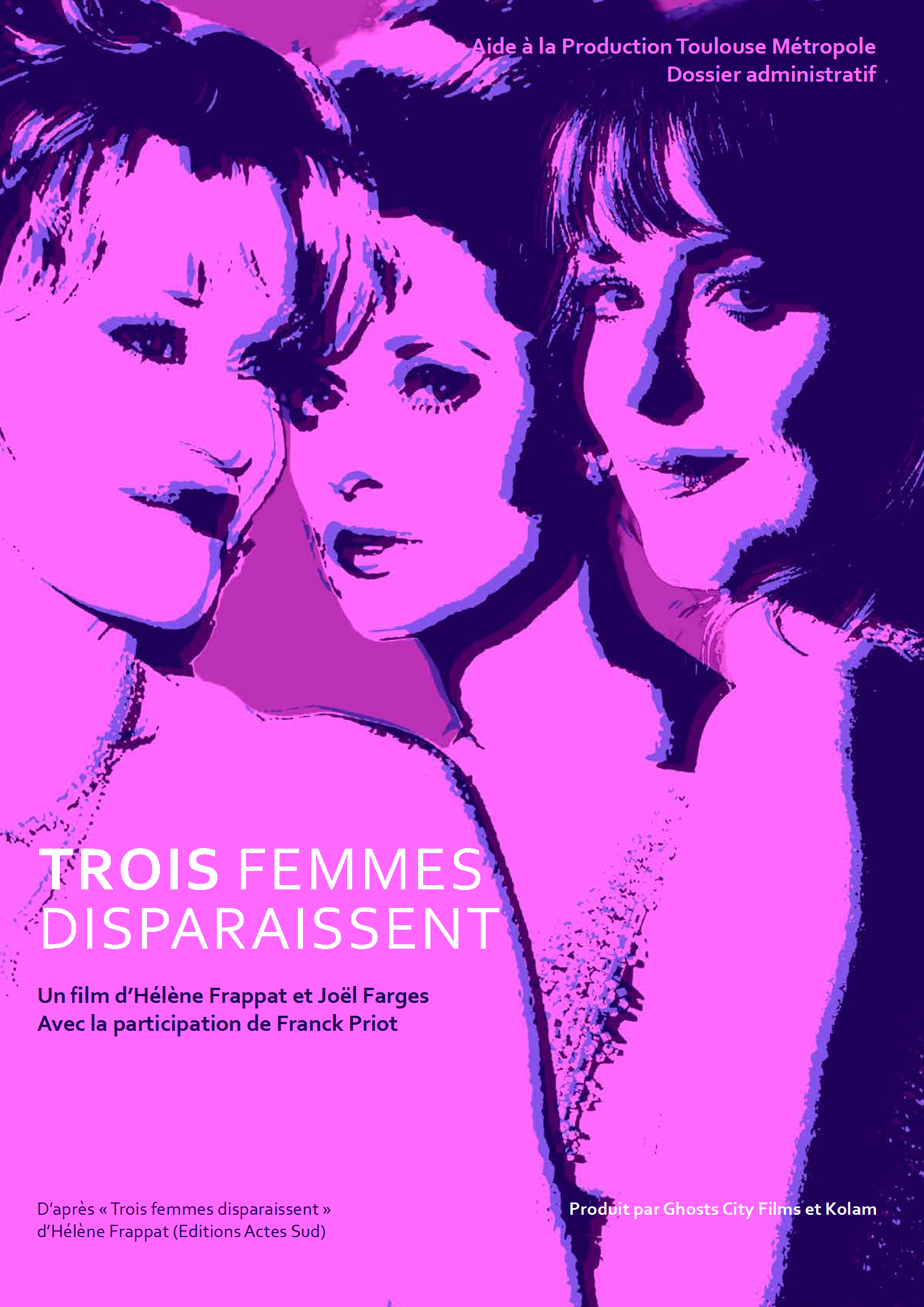
Three Women Disappear
A film by Hélène Frappat and Joël Farges, with the participation of Franck Priot.
Produced by Ghosts City Films and Kolam.
Three Women Disappear (Trois femmes disparaissent) is a documentary that traces the story of three generations of Hollywood actresses — Tippi Hedren, Melanie Griffith, and Dakota Johnson.
Through their trajectories, the film explores the transmission between mothers and daughters, revealing how cinema can reproduce dynamics of power, desire, and violence, where women are both brought into the spotlight and placed at risk.
Synopsis:
Once upon a time, there was a lineage of Hollywood actresses, adored yet marked by destinies filled with cruel birds, ferocious beasts, and seductive men…
The first, Tippi Hedren, played for Alfred Hitchcock the prey of beaks and claws in The Birds, and a traumatized woman in Marnie. In a famous scene, the actress was actually attacked by birds. In her memoir, she reveals that the “Master of Suspense” attempted to assault her and destroyed her career. Once again, fiction and reality blur into one another.
The second, Melanie Griffith, Tippi Hedren’s daughter, appeared at the age of thirteen in Roar, surrounded by supposedly tamed wild animals. The shoot turned into a nightmare: “No animals were harmed. Seventy crew members were.” Injured several times, stitched back together, exposed, she carried the scars of this experience long after. Becoming a star in her own right before gradually disappearing from the screen, she later confessed to suffering from profound disturbances in her self-image.
The third, Dakota Johnson, the last of the lineage, portrays a heroine trapped in a relationship of domination in Fifty Shades of Grey. In her turn, she is caught in a web where male fantasies shape both bodies and roles.
An eternal return, dizzying in its repetition…
The investigator guiding our story questions what lies beyond these three destinies: the bond between mothers and daughters.
“Is every daughter doomed to be a disappointing remake of her mother? Can a woman exist without being haunted?”
Hélène Frappat and Joël Farges lead us into a vertiginous labyrinth of doubles, where women, captive to their reflections, glimpse the possibility of an escape.
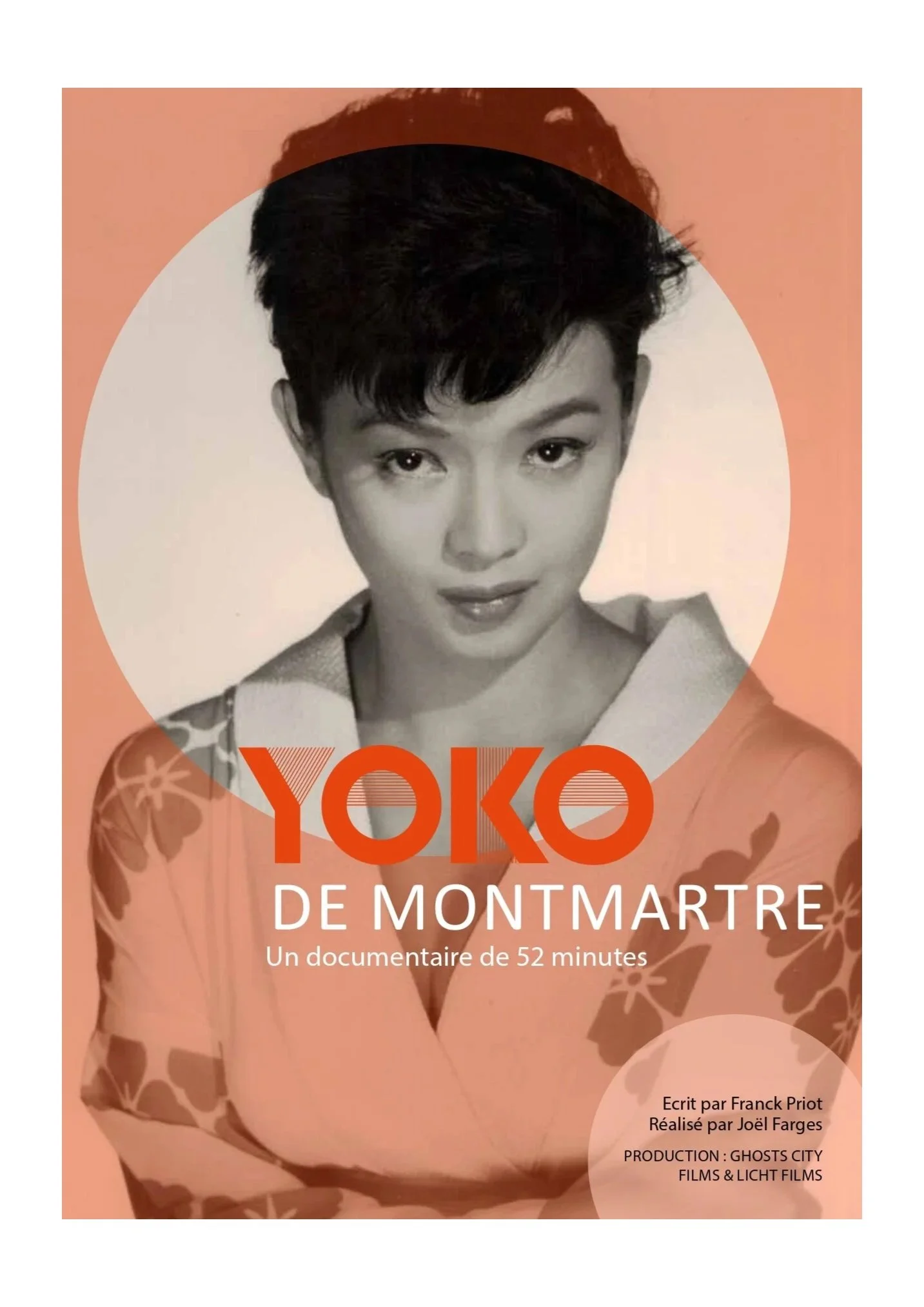
Yoko de Montmartre
Feature documentary (52’–90’)
Written and produced by Franck Priot, in collaboration with Hiromi Kimura, directed by Joël Farges.
Yoko de Montmartre retraces the extraordinary yet forgotten journey of Yoko Tani, a Japanese woman who, in the 1950s and 1960s, became the first Asian-born star of French and European cinema. A dancer and actress on both screen and stage, and the daughter of a Japanese feminist who died at a young age, Yoko introduced and embodied in France a new form of feminine beauty and glamour: the Asian woman.
IN FINANCING
Supported by: CNC – Images de la Diversité (writing grant and development support), Région Occitanie (development support), and the Franco-Japanese Sasakawa Foundation.
Synopsis:
Arriving in Paris at the age of 22 in 1950 to escape marriage, social pressure on her independence, and perhaps even the Japanese mafia, this survivor of the Tokyo bombings became a dancer and actress. She went on to become the first Asian woman to seduce Western leading men on screen, in interracial love stories that challenged the conventions of the time, notably gaining recognition at Cannes in 1960 with The Savage Innocents by Nicholas Ray. Her career then took off, leading her to appear in around fifty films and series.
Yoko captivated Western audiences with her style and beauty, first revealed at the Crazy Horse, and helped shift Europe’s perception from the “Yellow Peril” to “Yellow Fever,” expanding the boundaries of glamour.
The astonishing and largely forgotten path of this “Asian Josephine Baker” also represents the posthumous triumph of her feminist mother, whose tragic fate unfolded in wartime Japan. As our research for this documentary has uncovered, Yoko’s mother, Taeko, was a remarkably free-thinking and intelligent feminist writer, though she too has been forgotten. Her book For Young Women Who Move Forward, written shortly before her death during the war, became a kind of testament for her daughter. Its lessons on womanhood enabled Yoko to achieve the improbable: a successful career in a European entertainment industry that was, at the time, deeply (and often unconsciously) racist.